
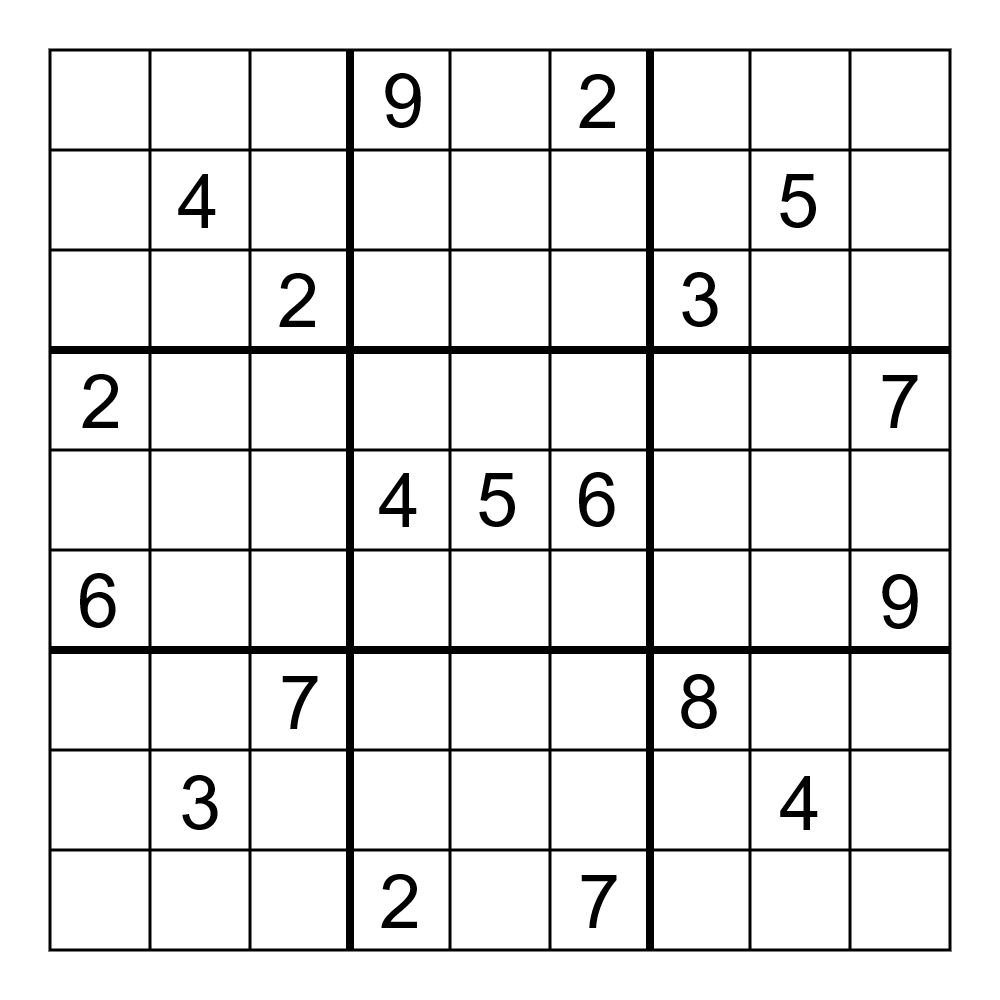
Opening a fresh usa today sudoku grid is one of life’s cleanest intellectual pleasures. The empty boxes invite you to bring harmony out of chaos. But while the core objective is remarkably simple, progressing from a tentative guesser to a confident master requires understanding the subtle geometry of the board. Whether you are solving on paper or on your screen, this masterclass reveals the essential principles, advanced tactical weapons, and exciting variations that will elevate your solving game forever.
The Golden Rules of the 9×9 Grid
The fundamental rulebook of Sudoku can be stated in a single sentence: Fill the 9×9 grid so that every row, every column, and every 3×3 box contains the numbers 1 through 9 exactly once.
Because there are nine digits and nine spaces in each house (the collective term for a row, column, or box), no number may ever repeat within the same house. Crucially, a well-constructed puzzle has exactly one unique solution that can be arrived at through pure deductive logic—guessing is never necessary.
Tactical Level 1: The Essential Scans
Every skilled solver begins with a clean visual sweep of the board. Here are the two foundational tactics every player must master:
- Cross-Hatching: Pick a frequent starting number (like 1 or 7). Trace that digit across adjacent rows and columns into an unsolved 3×3 box. The intersections will eliminate rows and columns, frequently leaving only a single legal square for that digit.
- Naked Singles: Focus on an empty cell surrounded by crowded neighbors. Count through numbers 1 to 9. If existing digits in that cell’s row, column, and box eliminate eight possibilities, the remaining number is forced.
- Hidden Singles: Sometimes a cell has three candidate notes, but within that row or 3×3 box, no other cell can legally hold a specific digit. That digit is “hidden” in plain sight.
Tactical Level 2: Advanced Candidate Chains
When the obvious singles run out, high-level usa today sudoku solvers employ subtle elimination patterns:
The Naked Pair: If two cells within the same row, column, or 3×3 box can only contain the exact same two candidates (for instance, [3, 8] and [3, 8]), those two digits are locked into those two cells. You can safely eliminate 3 and 8 from all other open cells in that house.
Box-Line Reduction: If candidate notes for a digit within a 3×3 box align entirely along a single row, that digit must appear in that row within that box. Therefore, you can erase that candidate from the rest of that row outside the box.
The X-Wing: When a digit can only appear in exactly two cells of two separate rows, and those cells share the same two columns, they form a rectangle (an X-Wing). You can immediately eliminate that digit from all other cells in those two columns.
Exploring the Exotic Variant Universe
Once you are comfortable with traditional 9×9 grids, a vibrant world of rule variations awaits:
- Killer Sudoku: Outlined “cages” with small corner numbers require you to ensure digits inside sum up to a target value, combining arithmetic with classic row-column deduction.
- Diagonal Sudoku (Sudoku X): Adds two shaded corner-to-corner diagonals that must also each contain digits 1 through 9 without duplication.
- Samurai Sudoku: Five overlapping 9×9 grids arranged in an ‘X’ shape, where the corner 3×3 boxes of the central grid overlap with the four outer grids.
- Hyper Sudoku: Adds four additional shaded 3×3 internal boxes that impose extra constraints on digits.
Frequently Asked Questions
What is the most common mistake beginners make?
The number-one mistake is guessing when progress slows down. Guessing inevitably causes contradictions dozens of steps later. Instead, systematically re-scan rows and update small pencil notes.
What are pencil marks and should I use them?
Pencil marks (or candidate notes) are tiny numbers written in the corners of cells to track legal possibilities. They are essential tools for solving hard and expert-level grids.
What is the minimum number of starting clues a valid Sudoku can have?
Mathematicians proved in 2012 that a standard 9×9 Sudoku puzzle must have at least 17 starting clues to guarantee a single unique solution.
Every complex grid is simply a chain of simple, beautiful deductions waiting to be unlocked. Test out these scanning strategies on your next usa today sudoku puzzle on usa-today-sudoku.com today and watch your solving speed surge!