
Sudoku daily cognitive workout habit provides curious puzzle lovers with a thoughtful, engaging window into why sudoku remains an essential part of daily life across the globe. Whether you are solving during a quiet morning commute, taking an intentional mental pause during a busy afternoon, or relaxing at home in the evening, a single puzzle session offers a pocket of clean deductive clarity. Here on USA Today Sudoku, our mission is to connect players with the stories, structural rules, and practical problem solving habits that make every round deeply rewarding.
You can dive into a fresh, responsive board right now on the USA Today Sudoku playable main page. If you enjoy exploring a broader variety of classic daily challenges across different genres, be sure to visit Easy Daily Puzzle or browse the full collection of sudoku puzzles on Easy Daily Puzzle.
Sudoku daily cognitive workout habit: the story and strategic heritage of sudoku
Engaging with a daily Sudoku puzzle offers far more than a pleasant morning distraction; it serves as a powerful cognitive tune-up for working memory and focus. Cognitive scientists emphasize that solving logic puzzles activates executive functioning in the prefrontal cortex, reinforcing pattern recognition without causing linguistic fatigue. Because the nine digits function as abstract symbols rather than arithmetic quantities, the brain practices pure relational classification and systematic elimination. Millions of daily solvers report that completing a single nine-by-nine grid with morning coffee instills a calm, structured mindset that carries through demanding workdays. This quiet psychological benefit explains why Sudoku remains an enduring daily ritual across generations and continents.
Understanding the principles behind Sudoku daily cognitive workout habit enriches how we appreciate these timeless games on modern digital screens. What began as handcrafted pastimes on paper, wooden boards, or parlor card tables has successfully adapted across generations while preserving its core appeal. Every move, deduction, or tactical pause you make today connects back to that rich legacy of patient problem solving. When players recognize the origins and milestones of their favorite pastimes, daily play feels less like routine clicking and more like participating in a living global tradition.
Historical records and trusted sources behind Sudoku daily cognitive workout habit
Separating verified puzzle history from casual lore requires consulting reliable archival and rule-keeping organizations. For readers interested in examining primary historical sources, international tournament records, or technical analyses, trusted publications such as Nikoli official Sudoku history and World Puzzle Federation logic competitions provide deep, factual documentation. These authoritative sources highlight the inventors, mathematicians, and dedicated communities who have nurtured these games through the decades. Whether you are researching scoring formulas, historical patent archives, or competitive rulebooks, solid evidence reminds us that thoughtful design endures.
How Sudoku daily cognitive workout habit guides player decisions in real games
Imagine opening a demanding grid and staring at a stubborn three-by-three box with only three vacant squares. The natural temptation is writing down whichever number looks plausible first, hoping to gain momentum. Applying Sudoku daily cognitive workout habit reminds you to pause and scan the crossing rows and columns for forced mathematical eliminations. A deliberate twenty-second pause prevents a subtle misplacement that could quietly corrupt your entire grid ten moves later.
Skilled solvers treat every square like a logical proof rather than an optimistic guess. When you allow verified constraints to guide your pencil, the entire board begins to unlock with calm, rhythmic certainty. Over time, your eye learns to identify hidden candidates and parallel tracks across distant boxes without cluttering the board with messy notes.
Essential player habits connected to Sudoku daily cognitive workout habit
- Always scan the most populated rows, columns, and boxes before writing candidate notes.
- Verify every prospective placement against all intersecting houses before committing.
- Use candidate marks as an active elimination filter rather than decorative clutter.
- Step away from a stubborn corner and let a breakthrough elsewhere illuminate the board.
Why clean visual design elevates Sudoku daily cognitive workout habit
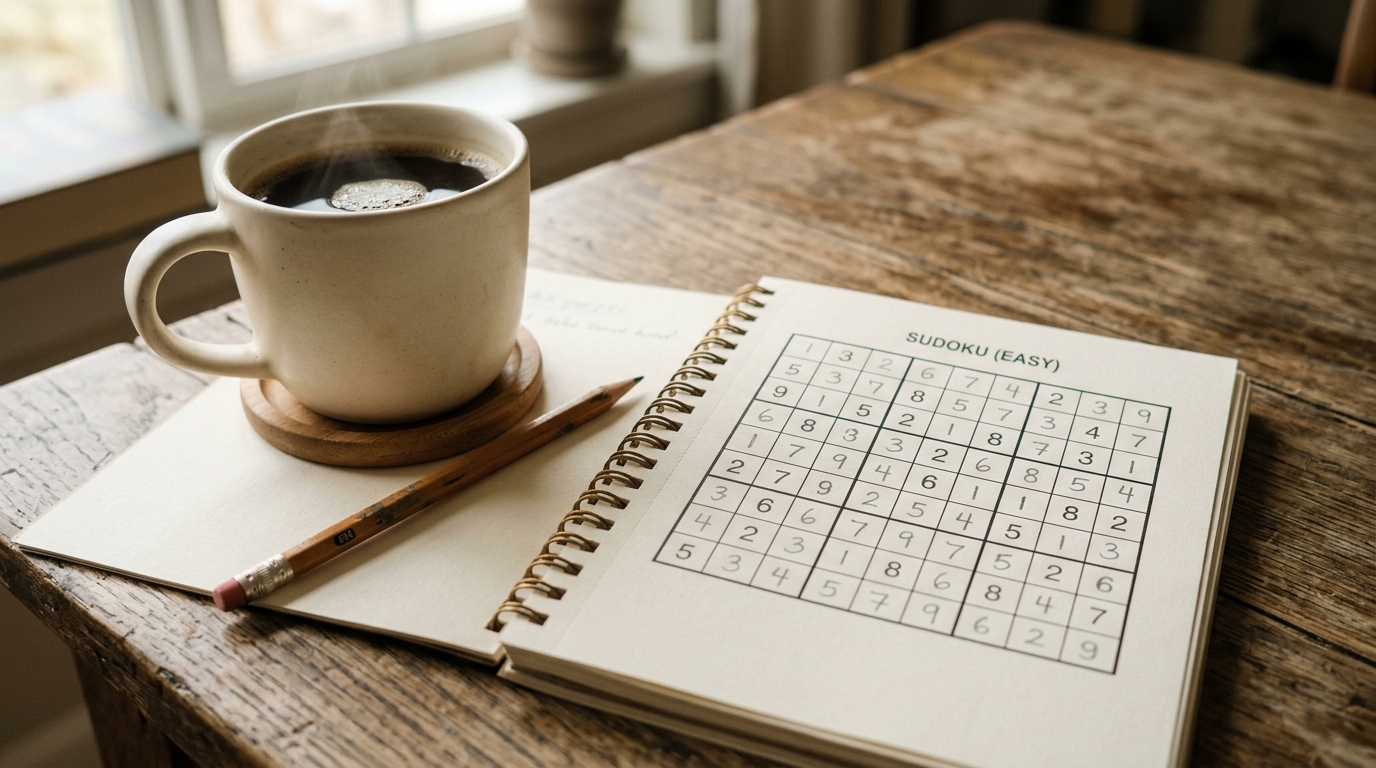
A clean visual presentation makes all the difference when enjoying sudoku online. The featured illustration accompanying this article is chosen to highlight the focused atmosphere of play, free from distracting clutter or confusing brand marks. Having an accurate visual reference paired with descriptive alt text celebrating Sudoku daily cognitive workout habit ensures that readers can immediately grasp the game state and follow along comfortably. Whether on desktop monitors or mobile screens, crisp contrast and uncluttered design help keep your attention centered on the puzzle itself.
Taking your next step with Sudoku daily cognitive workout habit
The most rewarding way to experience the benefits of Sudoku daily cognitive workout habit is to test these insights in an actual round today. Head over to USA Today Sudoku to enjoy a relaxing session with fresh perspective, focusing on deliberate choices rather than rushing the clock. Whenever you feel like broadening your horizons with crosswords, jigsaws, or classic card games, explore the Easy Daily Puzzle game library for endless daily variety. Great puzzle solving is not about chasing frantic records; it is about the quiet satisfaction of bringing order to a scattered board, one thoughtful move at a time.