
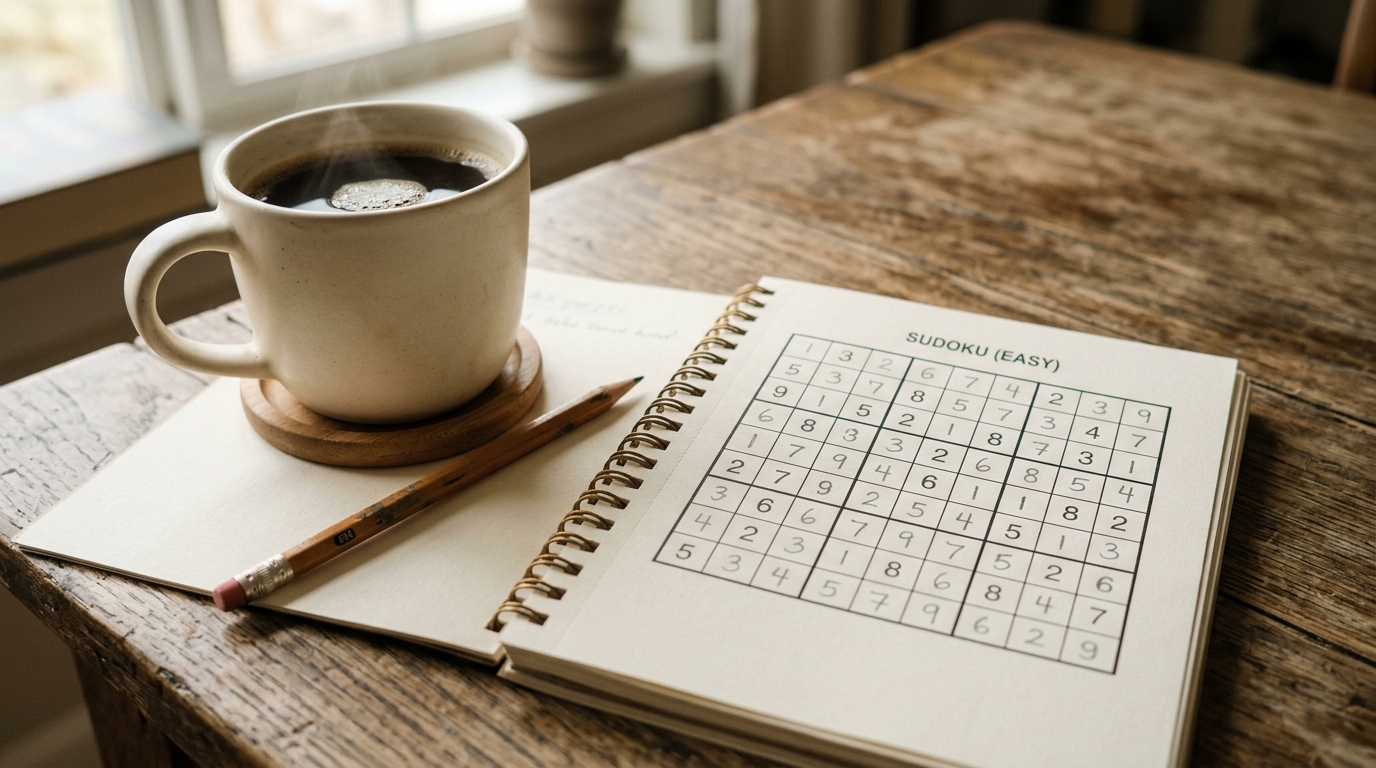
Sudoku newspaper routine starts in the quiet moment before the grid gets crowded.
The subject belongs on USA Today Sudoku because it is close to the way people actually play USA Today Sudoku: one decision, one small hesitation, one cleaner next move. A useful puzzle article should not try to sound huge. It should make the next round easier to read.
You can test the idea on the USA Today Sudoku main page. If you want a wider mix after that, open Easy Daily Puzzle or browse more USA Today Sudoku practice on Easy Daily Puzzle.
Sudoku newspaper routine: the small decision that changes the session
Sudoku traveled well because a number grid needs no translation and fits print, web, and mobile screens. This gives Sudoku newspaper routine a real reason to exist as a topic instead of a loose tip. It connects the game background with one decision a casual player can try today.
For outside context, Nikoli's Sudoku background and WSPC 2026 official site are useful starting points. They are included here because rules, origins, and competition details should be checked before they become blog copy.
What Sudoku newspaper routine looks like during play
A player sees two open cells in a box and wants to fill one quickly. Sudoku newspaper routine asks for a slower check: what number is being forced by the surrounding row and column?
That pause keeps the grid honest. The next number should feel boringly certain, not excitingly possible.
The value of Sudoku newspaper routine is that it gives the player a filter. Instead of asking whether a move is legal, ask what the move reveals, confirms, opens, or protects. That keeps the post practical and keeps the game feeling casual.
How to practice Sudoku newspaper routine
Use one round as a test. Do not chase every advanced trick at once. Pick Sudoku newspaper routine as the rule for the next session and watch where it changes your first few choices.
- Scan the fullest rows and boxes before writing notes.
- Check every candidate against row, column, and box.
- Let one proven placement open the next section.
- Leave a stubborn square alone until another house gives information.
Why beginners miss Sudoku newspaper routine
Beginners usually miss timing. They learn the rules quickly, then assume the first available move is the right one. In puzzle games, order matters. A move can be allowed and still make the next minute harder.
This is especially true online. Fast restarts, quick clicks, and undo buttons make it easy to move before reading the board. Sudoku newspaper routine works like a small brake. It does not slow the whole game down. It slows the one move that deserves a second look.
The old lesson inside Sudoku newspaper routine
The background matters, but only when it comes back to the board. The familiar grid grew from Number Place and then found a cleaner identity through Japanese puzzle publishing. That is why these games keep surviving new formats. They do not need a dramatic story every time a player opens them. They need one compact problem that feels worth finishing.
Sudoku traveled well because a number grid needs no translation and fits print, web, and mobile screens. A newspaper page, a puzzle book, a browser tab, and a phone screen all ask the same question in different ways: can the player understand the next move quickly enough to stay interested? Sudoku newspaper routine helps answer that question because it turns a familiar game into a cleaner decision.
For competition-style topics, the lesson is similar. The 2026 World Sudoku Championship is listed for Kolkata, India, from October 11 to 18. Casual players do not need tournament pressure, but a timed room makes one truth visible: rushed moves are expensive. The same truth applies in a quiet five-minute break.
Where a picture helps explain Sudoku newspaper routine
The best image for this article should be simple: one clear USA Today Sudoku scene, no brand marks, no clutter, and alt text containing Sudoku newspaper routine. A real image in the WordPress post also helps readers understand the page before the advice begins.
If the image shows a board state, it should show the decision point rather than a finished win. A grid with a highlighted pattern, a crossword corner with crossings, a half-sorted jigsaw table, or a card layout before a risky move is more useful than a generic victory picture.
A better next round with Sudoku newspaper routine
Try one session with a plain rule: reward moves that make the board easier to understand. If a move reveals a hidden card, confirms a letter, removes a false candidate, or builds a reliable picture island, it has earned attention. If it only looks busy, let it wait.
After that round, switch pace if you want. Return to USA Today Sudoku for the same game, or use the Easy Daily Puzzle game library when numbers, cards, words, and pieces all start to sound equally tempting.
The useful memory is small. Sudoku newspaper routine is not a grand theory. It is one extra glance before the move that would have made the board harder to read.