
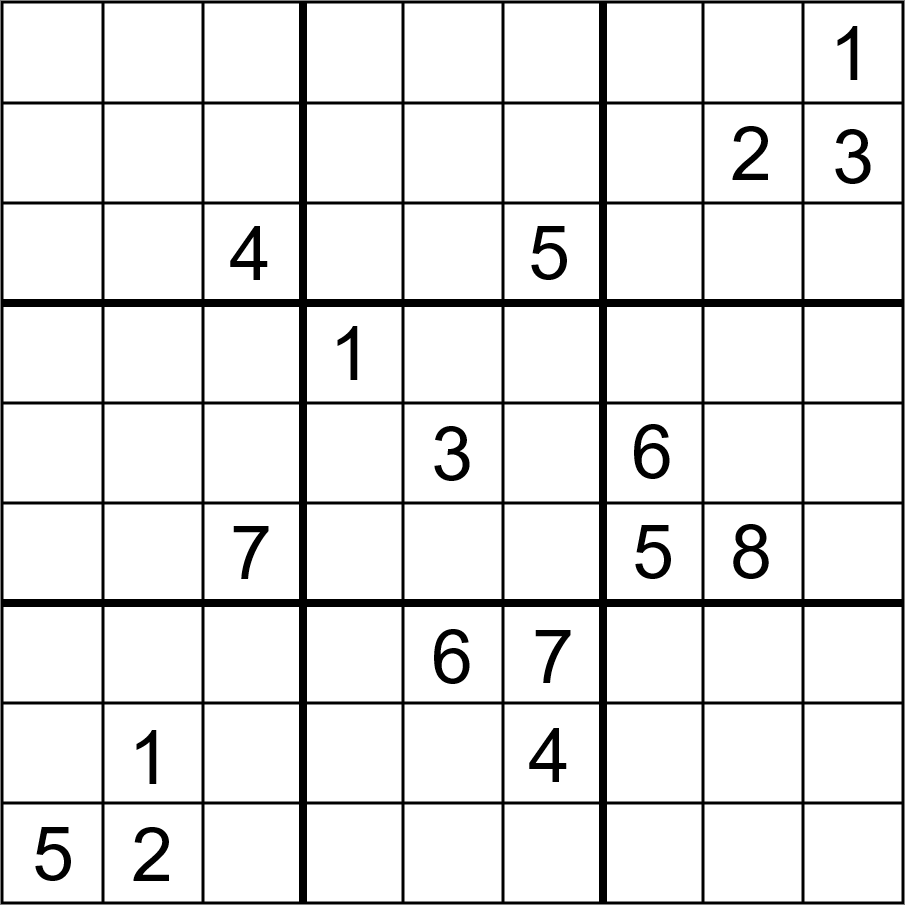
Paper Sudoku has one advantage a small screen cannot quite copy: you can see the history of your thinking. It also has one obvious weakness. If pencil marks grow everywhere, the page stops helping. Sudoku newspaper pencil marks gives that moment a name, but the useful part is the habit behind it. The aim is not to make every move look clever. It is to make the next move easier to explain.
Why Sudoku newspaper pencil marks matters on an ordinary puzzle
Good Sudoku newspaper pencil marks are temporary evidence, not decoration. Write only candidates that survive the row, column, and box rules. Keep them small enough to read and light enough to erase. The goal is to make a future scan faster, not to fill every empty cell as soon as the puzzle begins. A player does not need a tournament setup or a perfect memory to use this idea. It works during a short browser session, on a printed page, or in the middle of a game when attention is starting to drift.
Sudoku rewards a particular kind of attention. The board does not ask you to remember a long story or recognise a picture. It asks you to compare small relationships again and again. That is why a narrow scan can be stronger than a grand plan. One row limits a box, the box limits a column, and the new number sends information back through the same three units. The player who keeps that loop visible usually makes fewer repairs later. If the scan feels dry, shorten it: choose one digit, one unit, and one reason for every mark.
The broader history of this kind of puzzle helps explain why the habit travels well. Nikoli’s Sudoku background provides useful background for the sudoku format, while Conceptis Sudoku history overview offers a second view of its rules or history. The sources differ in detail, but both point to the same practical lesson: a clear structure gives the player something reliable to inspect.
How to use Sudoku newspaper pencil marks without forcing it
Begin with one unit that is close to complete. Add notes only where a missing digit has a realistic home. When you place a number, erase that digit from the three connected units before adding new notes. This order matters. Cleanup first prevents old candidates from making a solved area look more complicated than it is. Start with a legal move and let the evidence narrow the field. If the position does not improve, stop. A good technique is a filter, not a command to keep pushing the same idea after the board has moved on.
A short routine for the next game
Use the margin as a short log: mark a pair, circle a unit that needs a recheck, and cross out a false trail rather than rubbing the page until it is grey. If the grid becomes crowded, pause and rewrite only the unresolved cells. A clean second pass is often quicker than reading a messy first pass.
- Start with the most complete unit.
- Use light marks for candidates and darker marks only for answers.
- Erase connected notes after every placement.
- Rewrite unresolved cells when the page becomes noisy.
The mistake that makes this idea feel harder
The paper-specific mistake is writing a full set of notes and never revisiting it. A stale mark can make a hidden single invisible. Another problem is using heavy ink for a tentative number, which makes a guess look like a fact. Pencil, spacing, and regular erasing are part of the solving method.
What to remember when the board changes
The newspaper format has lasted because the grid fits a quiet routine. With a light hand and a clear cleanup habit, paper notes become a map of useful constraints instead of a wall of tiny numbers. That is also why Sudoku newspaper pencil marks should stay practical. Use it when it describes the board in front of you, then return to ordinary reading when the evidence changes. A puzzle is allowed to ask a different question on the next move.
If Sudoku newspaper pencil marks does not produce a move today, that is useful information too. Leave the position clean, keep the strongest clue visible, and come back after one ordinary move. Techniques become reliable through that small return: notice the signal, test it, record what changed, and stop before the idea turns into a guess. Over time, the pause becomes part of your solving rhythm rather than a sign that the puzzle has defeated you.
Keep the session concrete. Name the clue, make one reversible change, and look again. That is enough for a useful practice round, even when the puzzle is unfinished. A short note about what changed makes the next session easier to start.
For a live session, Play more puzzles on usa-today-sudoku.com. When you want a related example, browse related posts on this site. You can also try another daily puzzle at Easy Daily Puzzle or find more puzzle guides on Easy Daily Puzzle. Keep the next step simple: play one puzzle, try the routine once, and notice which decision became clearer.